Signs and damage symptoms of Grapevine powdery mildew
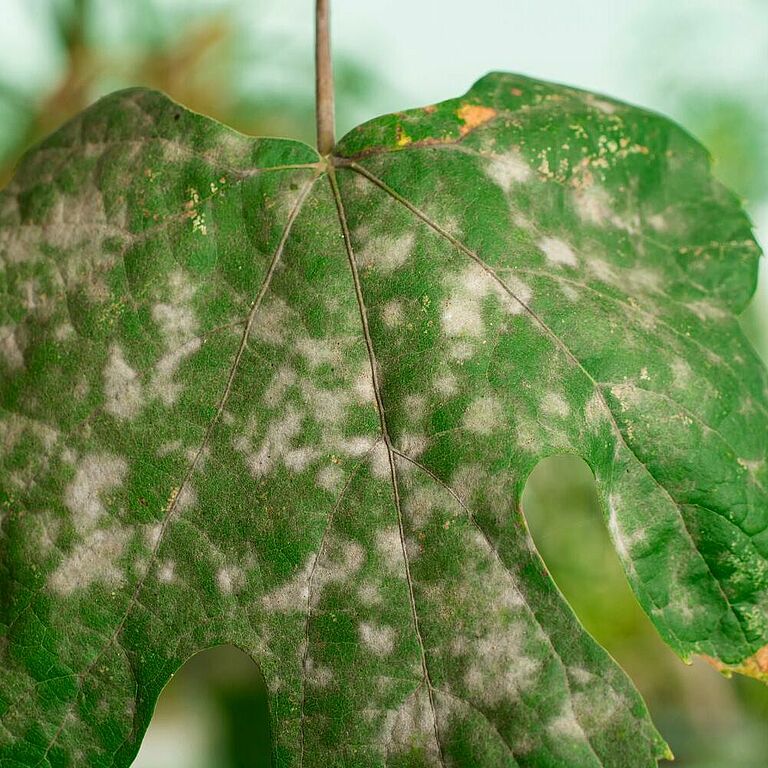
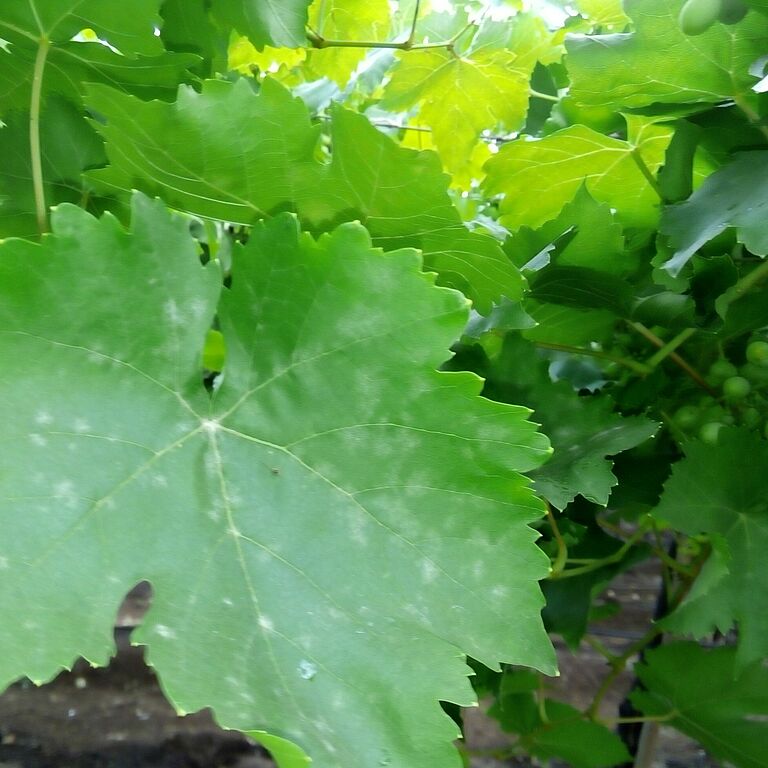
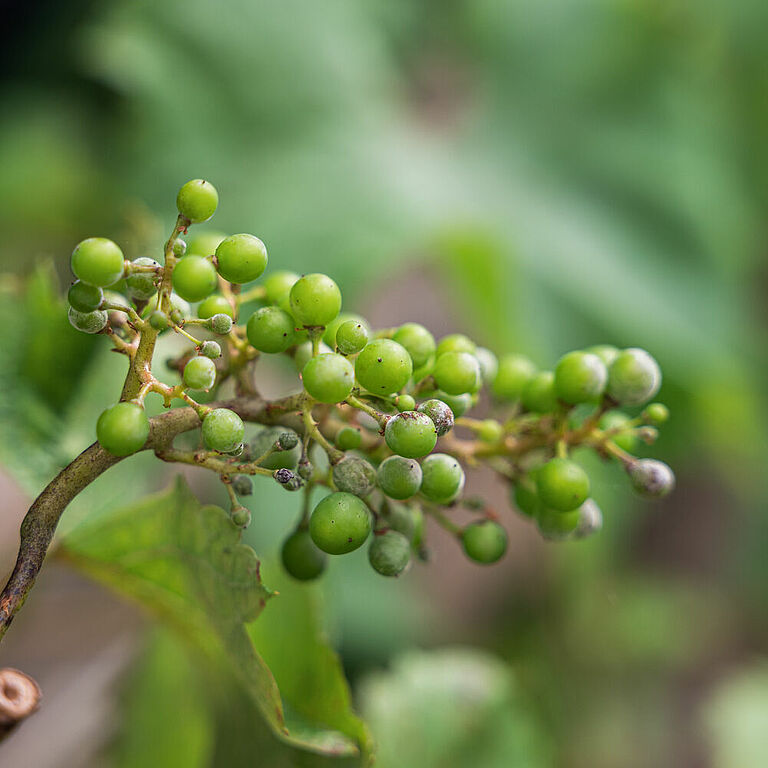
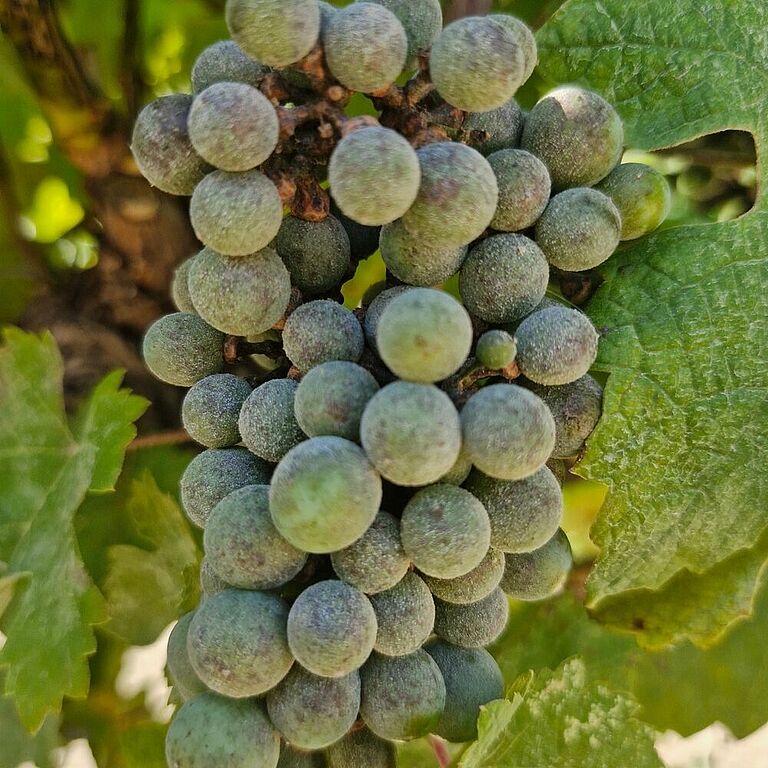
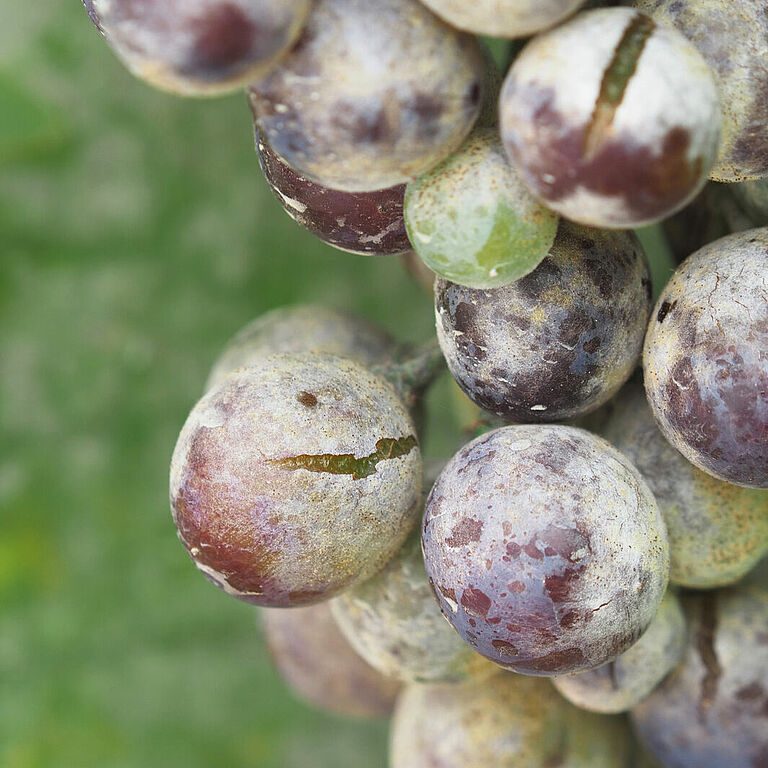
Symptoms of grapevine powdery mildew vary according to the phenological growth stage and the severity of the infection. Early signs manifest as chlorotic (pale green to yellow) spots, which rapidly develop into the characteristic white to grey powdery mycelium.
As the infection intensifies, affected leaves suffer a marked reduction in photosynthetic capacity, while shoots and flowers exhibit stunted growth and poor fruit set. During berry development, the pathogen colonizes the epidermis, causing the skin to lose elasticity. This frequently leads to berry cracking, which severely compromises fruit quality and serves as a primary entry point for secondary infections, such as Botrytis bunch rot.
Leaf symptoms
- Pale green to yellowish spots on the upper leaf surface
- Development of white to grey, powdery fungal growth
- Powdery coating may also appear on the underside of leaves
- Leaf curling, distortion, and brittleness as infection progresses
- Reduced photosynthetic activity and weakened vine vigor
Shoot and tendril symptoms
- White, powdery patches on young shoots and tendrils
- Reduced shoot elongation and poor lignification
- Increased susceptibility to mechanical damage and stress
- Weakened shoot growth affecting canopy structure and fruit support
Flower and cluster symptoms
- Infection of flowers and young clusters during flowering
- Poor fruit set and increased flower drop
- Uneven and abnormal cluster development
- Powdery coating on clusters resulting in loose, misshapen bunches
- Reduced yield potential
Berry symptoms
- High susceptibility from fruit set until veraison
- White to grey powdery fungal growth on berries
- Inhibited berry expansion and abnormal development
- Cracking of berry skin as fruit enlarges
- Increased risk of secondary infections such as Botrytis
- Reduced grape quality, sugar accumulation, aroma and marketability