perennial plants used in gardens and parks. There is a wide range of plants especially produced to demonstrate coloured flowers in spring and summer. They [...] They are easily divided in four different categories: Hardy annual plants which are planted directly into the soil already early in the season: sunflower [...] eschscholzia Tender annual or perennial plants are planted in a protected environment in late winter: begonia, chrysanthemum, arguranthemum, lobelia,
long and 10 cm or 3.9 inches in diameter. Cucumbers develop from flowers and their seed develop within the fruit, therefore in botanical terms they are classified [...] Cucurbitaceae . The cucumber originates from South Asia, more particularly in India. The plant’s cultivation history goes back some 3000 years and it is
About A melon can be any one of several plants belonging to the family of Cucurbitaceae . The melon plant produces a usually sweet and edible, fleshy fruit. The term "melon" is used for the plant, but
About The common bean (also referred to as the string bean, field bean, flageolet bean, French bean, garden bean, green bean, haricot bean, pop bean, or snap bean) is a herbaceous annual plant. Botani
and is widely produced for its tasty fruit. In North America and Australia the fruit is called eggplant and in South Africa and Southeast Asia it is known
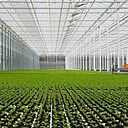
thrive. Digital scouting apps In the digital age, scouting is aided by mobile apps that can catalog and analyse data in real time. These tools streamline [...] Understanding crop monitoring and scouting In the world of agriculture and horticulture, the phrase "knowledge is power" couldn't be truer. Crop monitoring [...] the scouting process and make it more efficient. Using a crop scouting tool in horticulture can lead to more effective, sustainable, and profitable crop
Eggs are deposited in leaf tissue in a slit cut by female. Eggs are colourless to pale white in colour. The nymphs resemble the adults in general body form [...] soil and pupate in soil. There are two pupal stages viz., prepupae and pupae. Adults are pale yellow or white in colour and 0.8 to 1mm in length, with females [...] flowers. In addition to direct damage, it also transmits virus from infected to healthy plants. Life cycle and appearance The reproduction in Thrips palmi
will be completed in 25 to 31 days under optimal conditions. In cool dry conditions, larvae may undergo diapause in small cocoon in partially opened bolls [...] on or near the buds and flowers. Each female lay egg about 200-400 in singly or in small groups. Young larva enters the buds or flowers or squares after [...] General The pink bollworm is important pest in cotton cultivation. The pink bollworm is native to South Asian countries and has spread to all cotton growing
during the autumn.. Larvae overwinter in the soil, usually in the third instar stage. and start feeding again in spring. They become active again and feed [...] Eggs are black in colour, oval, 1mm long and deposited on the soil surface. Larvae are cylindrical, tapering toward the head, and grey-brown in colour. Larvae [...] feed voraciously when the soil begins to warm up in spring. The larvae pupate below the soil surface in summer. The pupal stage lasts about two weeks.
is dark in colour. The siphunculi are black and bent outwards. The rose aphid usually overwinters on rose bushes in the egg stage, although in mild winter [...] cycle, with both winged and wingless forms of adults and a great variety in colour. In greenhouses, reproduction takes place by parthenogenesis, with unfertilized [...] colonies of aphids can build up on roses in spring and summer; sometimes shoots are completely covered by aphids. In summer, winged aphids spread the infestation