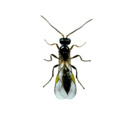
General The woolly aphid, Eriosoma lanigerum , is a serious worldwide apple pest. It is probably of North American origin and has been distributed to other parts of the world mainly via infested apple
General Click beetles are elongate beetles with a hard exoskeleton, with the head deeply retracted into the thorax. When disturbed they lie on their back feigning death and then suddenly propel themse
General The diamond back moth (Plutella xylostella) belongs to the family of Plutellidae . It only attacks Brassicaceae species, including cruciferous weeds. The diamond back moth (Plutella xylostella
General The onion thrips (Thrips tabaci) is distributed throughout the world. It is found outdoors on many plants and particularly damaging on onions, leek, and in greenhouses on cucurbits, tomato, sw
General The red palm weevil ( Rhynchophorus ferrugineus ), also known as palm weevil, Asian palm weevil or Sago Palm Weevil originates from tropical Asia, but has spread to Africa and Europe with dist
General The broad mite (Polyphagotarsonemus latus) occurs in the tropics and in greenhouses in temperate regions. The broad mite (Polyphagotarsonemus latus) has a wide range of host plants, especially
General The tomato leaf miner (Liriomyza bryoniae) has many host plants and has caused crop damage in many parts of the world, including North Africa, Europe and northern Asia. In warmer regions, the
relative humidity (RH) promotes germination of spores but inhibits spore production, so the net effect of the RH is very small. Wind and draught in greenhouses
Koppert Sustainable Solutions (India) Private Limited (KoSSIL) which is a Joint Venture between Koppert Biological Systems India Pvt Limited (KIN) and
the agricultural landscape. As Lukas steers his hop farm towards organic production, setbacks have been inevitable. However, amidst the challenges, there