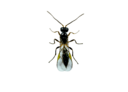
Pests Young larvae of various thrips species and eggs and larvae of whitefly . Crops Do not use in tomato. Mode of action Predatory mites multiply in the
Panonychus ulmi ); citrus red mite ( Panonychus citri ); other spider mite species. Crops Do not use in tomato. Mode of action Predatory mites reproduce within
damping-off of seedlings. It has a wide range of hosts, around 500 botanical species, including dicotyledons and monocotyledons, distributed in all agricultural
Sternorrhyncha. The whiteflies form the family Aleyrodidae. The most common species are the greenhouse whitefly , Trialeurodes vaporariorum , and the tobacco
mines, making it an unreliable criterion for the identification of the species. Indirect damage arises when disease causing fungi or bacteria enter the
tropical and subtropical America, probably Brazil or Mexico. Hundreds of plant species from different families serve as suitable hosts for this whitefly. It occurs
thrips (Frankliniella occidentalis) is currently the most damaging thrips species in many greenhouse crops. The western flower thrips (Frankliniella occidentalis)
Pests Young larvae of various thrips species and eggs and larvae of whitefly . Crops Do not use in tomato. Mode of action Predatory mites reproduce within
Pests Young larvae of various thrips species and eggs and larvae of whitefly . Crops Do not use in tomato. Mode of action Predatory mites pierce their