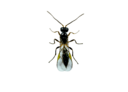
General The tomato leaf miner (Liriomyza bryoniae) has many host plants and has caused crop damage in many parts of the world, including North Africa, Europe and northern Asia. In warmer regions, the
General The American serpentine leaf miner ( Liriomyza trifolii ) originates from North America, but occurs also in Europe since about 1976. The American serpentine leaf miner ( Liriomyza trifolii ) i
General Since the start of its invasion in 2008/2009, the spotted wing drosophila, which is originally from Asia, has spread extensively in North and South America and Europe where it has caused sever
General The larvae of crane flies , called leatherjackets, live in the soil and feed on roots and shoots (which they pull into the ground of mainly grasses and cereal crops. The adults do not cause an
General The diamond back moth (Plutella xylostella) belongs to the family of Plutellidae . It only attacks Brassicaceae species, including cruciferous weeds. The diamond back moth (Plutella xylostella
Side Effects app Understand the impact of pesticides on beneficial organisms and pollinators Pesticides can have both direct and indirect effects on natural enemies and pollinators. Our Side Effects a
Orius laevigatus for thrips control Orius laevigatus is a small yet highly effective predatory bug used in biological pest control of thrips . This beneficial insect has been extensively integrated in
Cryptolaemus montrouzieri for mealybug control The predatory beetle Cryptolaemus montrouzieri is a species of beetle belonging to the family Coccinellidae. The beneficial insect is a small but highly
The predatory mite Phytoseiulus persimilis is by far the most important natural enemy of Two-spotted spider mite (Tetranychus urticae) and has been used in many crops worldwide, mainly in greenhouses,
Rediscovering natural approaches to plant health Embracing biological pest control Over the years, biological pest control has proven effective in managing pests without the drawbacks of chemical pest