red spot. They have broad hindwings, evenly light or dark grey or orange-yellow with a broad dark marginal stripe. The wingspan is about 40-55 mm and the
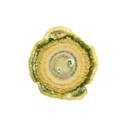
severity of the infection. Early signs manifest as chlorotic (pale green to yellow) spots, which rapidly develop into the characteristic white to grey powdery
ribbon coated with wet sticky glue. Available colours and sizes Colours : yellow, blue, white, red, black and transparent Standard sizes: 5, 15 and 30 cm
transmitting harmful viruses. Their feeding weakens plants, causes leaf yellowing and leads to honeydew deposits that reduce crop quality. Effective whitefly
have black limbs and an orange-brown body that is coated with white and yellow wax. The adult ‘females’ are easily recognized by their large size (up to
but later adopting a variety of colours such as green, brown, pink, and yellow. Other features are its size in the final instar (approximately 35 mm) and
absoluta ) are cylindrical. Their colour varies from creamy white to bright yellow, darkening in the embryonic phase and becoming almost black near eclosion
an egg stage and five nymphal instars. The elongated-oval eggs are light yellow when freshly deposited and bright orange with two distinct red eye spots
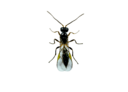
become brownish. Whitefly pupae parasitized by Eretmocerus eremicus turn yellow, the adult parasitoid wasp can be seen clearly within the parasitized whitefly
saw-like ovipositor. Larvae are nearly transparent white or yellowish to orange-yellow, with a large head and bright red eyes. Adult females are very variable