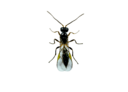
Releases should be repeated at least 3 times at weekly intervals or until control is achieved. At low temperatures ( Environmental conditions Diglyphus isaea
disease detection. Identifying pests and diseases early allows for targeted control measures, reducing the need for excessive pesticide use. This not only reduces
Pests Two spotted spider mite ( Tetranychus urticae ) and other Tetranychus spp., except Tetranychus evansi . Mode of action Predatory mites pierce their prey with their sucking mouthparts and suck ou
Pests Various species of thrips . Crops Do not use in tomato. Mode of action Adults and nymphs pierce thrips larvae and adults with their sucking mouthparts and suck out the contents. Visual effect Or
the crop. Release should be repeated after 4 weeks if the pest is not controlled. Consult a Koppert advisor or a recognized distributor of Koppert products
the crop. Release should be repeated after 5-6 weeks if the pest is not controlled. Consult a Koppert advisor or a recognized distributor of Koppert products
Pests Young larvae of various thrips species and eggs and larvae of whitefly . Crops Do not use in tomato. Mode of action Predatory mites pierce their prey with their sucking mouthparts and suck out t
Pests Two spotted spider mite ( Tetranychus urticae ); European red mite ( Panonychus ulmi ); citrus red mite ( Panonychus citri ); other spider mite species. Crops Do not use in tomato. Mode of actio