the petioles and stems and form long dark streaks. On fruits, first small black specks are seen on green fruits. The specks grow into brown spots that look
wn gummy drops occur, hence the name gummy stem blight. On the lesions, black specks, the new fruiting bodies with spores, become visible. On the leaves
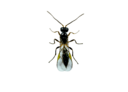
and is black with dark brown legs. A female has a more pointed abdomen that is as long as the wings, is equipped with an ovipositor, and is black, with
cause root- and crown rot in potted plants. The small roots die and brown-black lesions occur on the larger roots. Plants wilt and the crown leaves drop
and one pair of narrow, clear wings with clearly visible veins. Eggs are black in colour, oval, 1mm long and deposited on the soil surface. Larvae are
kernel. The bunt balls are grey-brown. They rupture at harvest and release black, powdery spores, that smell like fish, hence the common name stinking bunt
Phytophthora cactorum causes seedling damping off, a reduced root system and black discolouration of the roots. On the foot, dark brown lesions with sharp borders
blackish-brown forewings, suffused with ash-grey and a large, metallic, bronzy black ocellus on the hind part. The hindwings are brown. The eggs are about 1.3
surrounding tissue to die. The resulting silver-grey patches on leaves and the black dots of their excreta indicate their presence in the crop. The vigour of