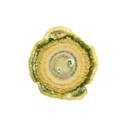
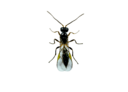
General Venturia inaequalis is an ascomycete fungus that causes apple scab disease Damage symptoms Venturia inaequalis causes apple scab disease, which at first presents itself as lesions on blossoms,
General Ustilago nuda f.sp. tritici is a basidiomyceteous fungus that affects wheat. It is also known as loose wheat smut, or loose smut of wheat. Damage symptoms Infection by Ustilago nuda f.sp. trit
General Ustilago nuda f.sp. hordei affects barley and can destroy a large proportion of the crop. It is also known as barley smut, or loose smut of barley. Damage symptoms Infection by Ustilago nuda f
this crop to other crops. How to prevent Pierce's disease of grapevine Control vectors by using netting or applying insecticides Remove wild host plants
General Erwinia carotovora subsp. carotovora has recently been renamed Pectobacterium carotovora . It is one of the pectolytic bacteria causing extensive bacterial rots (bacterial soft rot, bacterial
General Mycosphaerella fijiensis also known as black sigatoka, is an ascomycete fungus that causes leaf-spot of banana. Damage symptoms Black sigatoka (Mycosphaerella fijiensis ) first causes small, l
General Powdery mildew is a fungal disease that is caused by many different species of fungi such as Erysiphe, Podosphaera, Oïdium, Leveillula. Damage symptoms Powdery mildew symptoms are fairly simil
Amazone Plants uses a variety of beneficials to keep these pests under control. Consultant Wim van der Meer names them for us. Amazone Plants uses Macro-Mite [...] means that there is always a strong population in the greenhouse crop and control of the thrips is maintained at the right level. The method works fine in [...] success.’ Biological plant protection is so much better Amazone Plants controls aphids with a combination of the Aphipar parasitic wasp and the Aphidend
Releases should be repeated at least 3 times at weekly intervals or until control is achieved. Depending on the specific situation, it may be better to switch [...] 25°C (68 and 77°F). At a 24 hours average temperature below 17°C/63°F the control of whiteflies may be insufficient. For optimal performance of Eretmocerus
bisporus , is considered safe for most people to eat because it is grown in controlled, sterilized environments. Several varieties of A. bisporus are grown