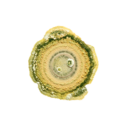
blossoms, and developing fruit. Infection occurs when susceptible plant tissue remains wet for several hours under favorable temperatures. Secondary infection
darker later on. The larvae have three pairs of legs. They do not feed and remain inactive unless disturbed. Once the larva has moulted to the protonymph [...] Sprinkle material on leaves or pour into Diboxes Make sure the material remains on the introduction site for at least a few hours after introduction Can
larva crawls into the ground to pupate. A small percentage of the larvae remain hanging on the leaf and pupate there, sometimes on the upper surface but
larva crawls into the ground to pupate. A small percentage of the larvae remain hanging on the leaf and pupate there.
instar larvae (crawlers) are mobile, whereas the rest of the larvae stadia remain flattened on the leaf. The fourth larva stadium develops into a white, oval
up nutrients from the epidermal layer of plant cells. Most of the fungus remains on the outside of the plant surface. On the mycelium on the plant surface
This causes a window effect where the epidermis of the upper leaf surface remains undamaged. Young caterpillars are often found in groups, spreading out over
Spread the material on rock wool slabs or in Diboxes Make sure the material remains dry and is not moved from its introduction site for at least a few days
rs live in groups and spin loose webs over the leaves, under which they remain until the third or fourth instar. Older caterpillars are active walkers
end, forming a distinctive 'V' shape. Throughout their development, larvae remain quite small and active. Except for the first instar, which mines in the