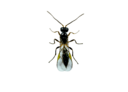
action Adult parasitic wasps emerge from the mummies and females lay their eggs into aphids . The next generation of parasitic wasps develops inside the
Predatory mites provide the foundation of control by feeding on spider mite eggs, larvae, nymphs and adults. Predatory bugs and gall midges complement this
Pests Young larvae of various thrips species and eggs and larvae of whitefly . Crops Do not use in tomato. Mode of action Predatory mites reproduce within
Pests Young larvae of various thrips species and eggs and larvae of whitefly . Crops Do not use in tomato. Mode of action Predatory mites pierce their
by parasitizing larvae and host feeding. Predatory mites and bugs feed on eggs and larvae of whiteflies. Beneficial fungi are very effective for whitefly
on plant sap and grow rapidly. When reproduction is sexual, the aphids lay eggs that overwinter. In greenhouses reproduction also takes place by parthenogenesis
biological control agent against aphid pests. Once the female wasp has laid her eggs inside an aphid, the emerging larvae begin their predatory activity by feeding
infective indefinitely. However, the bacteria are not transferred to the eggs and immature stages lose the bacteria after moulting. Long distance dispersal
effectiveness as biological control agents. Female gall midges lay their eggs on plant leaves, and when the larvae hatch, they feed on aphids. Gall midges