
Skip to content
  • Jump to:
  • Whitefly
  • Damage
  • Species
  • Life cycle
  • Solutions
  • News

Biological control of whitefly

Whiteflies are common pests in greenhouse and field crops, feeding on plant sap and transmitting harmful viruses. Their feeding weakens plants, causes leaf yellowing and leads to honeydew deposits that reduce crop quality. Effective whitefly control is essential to maintain healthy, productive crops and prevent the spread of diseases. Biological control of whiteflies uses a combination of natural enemies and tools that target different pest stages:

Parasitic wasps are key in reducing whitefly populations by parasitizing larvae and host feeding. Predatory mites and bugs feed on eggs and larvae of whiteflies. Beneficial fungi are very effective for whitefly control. Sticky traps help monitor and capture adult whiteflies. With Koppert’s biological solutions for whitefly, professional growers can maintain effective pest management, safeguard crop health and support sustainable production.

Biological solutions for Whitefly

Filters:
Clear all filters
Show all Show less
products found:

Questions or need help?

Find a reseller

Learn more about

What are whiteflies?
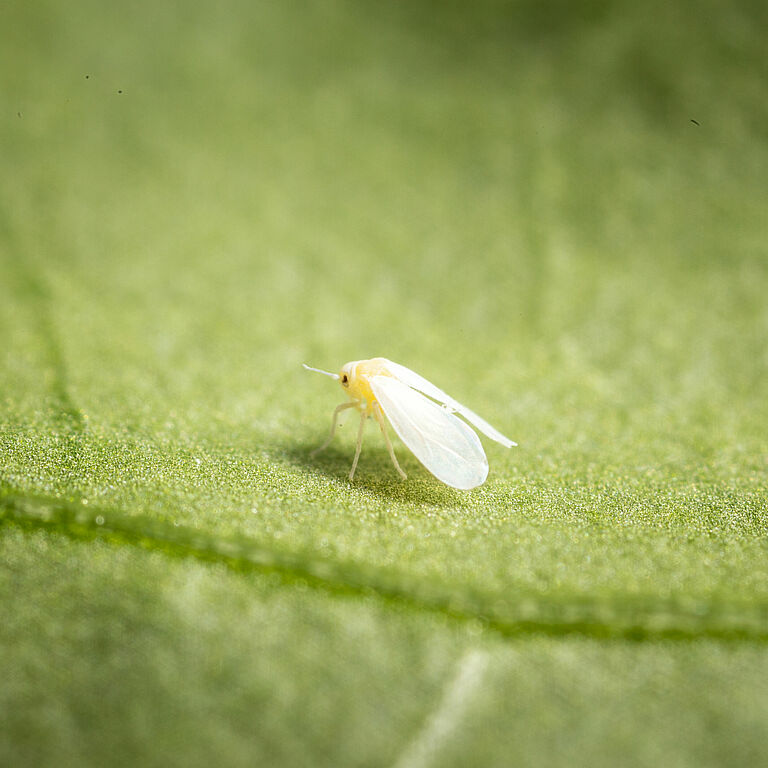
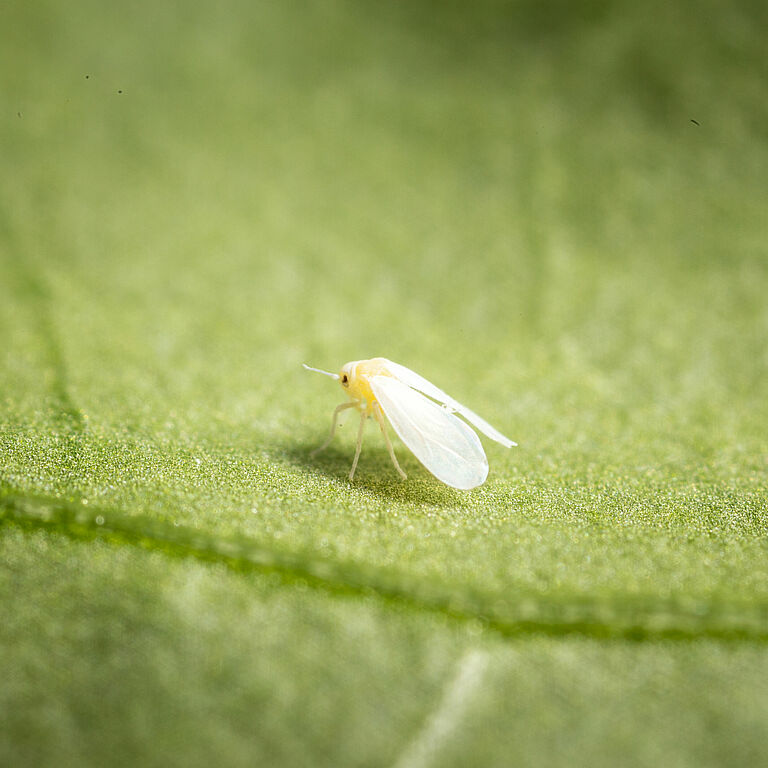
Whiteflies are not true flies, but belong to the order Hemiptera (true bugs). Together with aphids and scale insects, they belong to the division Sternorrhyncha. The whiteflies form the family Aleyrodidae. The most common species are the greenhouse whitefly, Trialeurodes vaporariorum, and the tobacco whitefly, Bemisia tabaci. Both are widespread, polyphagous and are broadly comparable in outline.

Whitefly damage

The larvae need a lot of nutrients for growth, and thus consume a large quantity of plant sap. This contains a high proportion of sugar, and the excess is excreted as honeydew, with larger larvae expelling large quantities. This can have the following consequences:

  • If the population is very large, feeding on plant sap can affect the physiology of the plant, as a result of which growth is retarded. In full sunlight, leaves can wilt and drop. Such leaf damage can in turn influence the development of fruit and lead to a reduction in yield.
  • By sucking plant sap and secreting honeydew, whitefly reduces the aesthetic value of crops. This is particularly important in ornamentals.
  • The honeydew deposited on fruit makes it sticky. Dirt adheres to the fruit, and the growth of sooty moulds (Cladosporium spp.) is encouraged. Such fruit is unsaleable. In serious cases the fruit will rot. Sooty moulds also develop on the leaves, reducing photosynthesis and transpiration.
  • Viruses can be transmitted from one plant to another. Both T. vaporariorum and B. tabaci are known to transmit viruses.

Whitefly species

Life cycle of whitefly

Whitefly control videos

Take a look at the video or go to our Youtube channel to see our whitefly control products in action.

How to get rid of whitefly

Need help?